

FREE SHIPPING ON ORDERS OVER €150 / £150 / $300 – ALL TAXES AND DUTIES INCLUDED

FREE SHIPPING ON ORDERS OVER €150 / £150 / $300 – ALL TAXES AND DUTIES INCLUDED

For decades, the design of women’s underwear has followed a remarkably consistent formula. Styles, fabrics and aesthetics may change from season to season, but one element has remained almost unquestioned: the elasticated waistband. It is so deeply embedded in lingerie design that it is rarely noticed, let alone challenged. And yet, for many women, this single detail has a disproportionate impact on comfort, fit and how underwear interacts with the body.
The assumption is simple: underwear needs elastic at the waist to stay in place. Without it, garments would slip, lose their shape or become impractical for everyday wear. As a result, elasticated waistbands have become the default solution across underwear of every style, from cotton basics to intricate lace designs.
But this default comes with trade-offs that are rarely discussed. For many women searching for underwear that doesn’t dig in, the issue often comes down to how the waistband is designed.
On paper, elastic is functional. In practice, it often works against the very purpose of lingerie: to flatter, support and enhance the natural silhouette. The waist is one of the most visually defining lines of the body. It is also an area where pressure, even slight, becomes immediately visible. Elasticated waistbands tend to compress this line, creating indentations, bulges or a sharp visual break exactly where softness and continuity are most desirable.
This is not a question of body type or size. On most bodies, even very slim ones, tight elastic at the waist interrupts the silhouette. Under clothing, this can translate into visible lines or an uneven look. Without clothing, it can simply feel uncomfortable – a constant reminder of pressure rather than support.
Yet because elastic is so ubiquitous, many women have come to accept these effects as inevitable. Discomfort is reframed as normal. Fit issues are blamed on the body rather than the garment.
There are underwear styles without elasticated waistbands, but they tend to be limited in scope. Most commonly, they rely on a single material, such as seamless microfibre briefs, minimalist cuts or full-lace styles, where stretch lace replaces elastic altogether.
These designs can work well, but they remain relatively simple in construction. The challenge arises as soon as underwear becomes more intricate. The moment a design incorporates multiple fabrics, embroidery, panels or more considered detailing, elastic almost inevitably reappears at the waist. It becomes the easiest way to stabilise complexity.
As a result, women are often presented with a trade-off: simplicity without elastic, or beauty supported by compression. Comfort is quietly associated with basics; more elaborate lingerie is expected to come with a degree of compromise.
Rethinking the waistband is not about rejecting functionality or reinventing underwear for the sake of novelty. It is a design question: can underwear stay in place, feel secure and maintain its shape without relying on tight elastic at the waist?
Answering that question requires a shift in priorities. Instead of asking how firmly a garment can grip the body, the focus moves to how it can work with the body’s natural lines. This involves shapes that follow curves rather than compressing them, fabric choices that provide gentle structure, and construction techniques that distribute support instead of concentrating it in one restrictive band.
In other words, it is about engineering comfort through design, not tension.
When elastic is removed or softened at the waist, every other design decision becomes more intentional. The cut of the garment matters more. The balance between stretch and stability becomes critical. Seams, panels and finishes have to be placed with precision.
Done well, the result is underwear that feels secure without digging in or leaving marks at the waist – pieces that sit against the body rather than pressing into it. You can see this approach across our collection of briefs, all of which are designed without relying on tight elastic at the waist.
This approach also changes how lingerie is worn and experienced. Under clothing, the fit appears smoother and more continuous; against the skin, the sensation is lighter – less about holding everything in place, more about gentle support.
Crucially, this does not mean sacrificing beauty. Thoughtful construction allows for refined aesthetics, delicate fabrics and considered detailing without reverting to heavy elastic solutions.
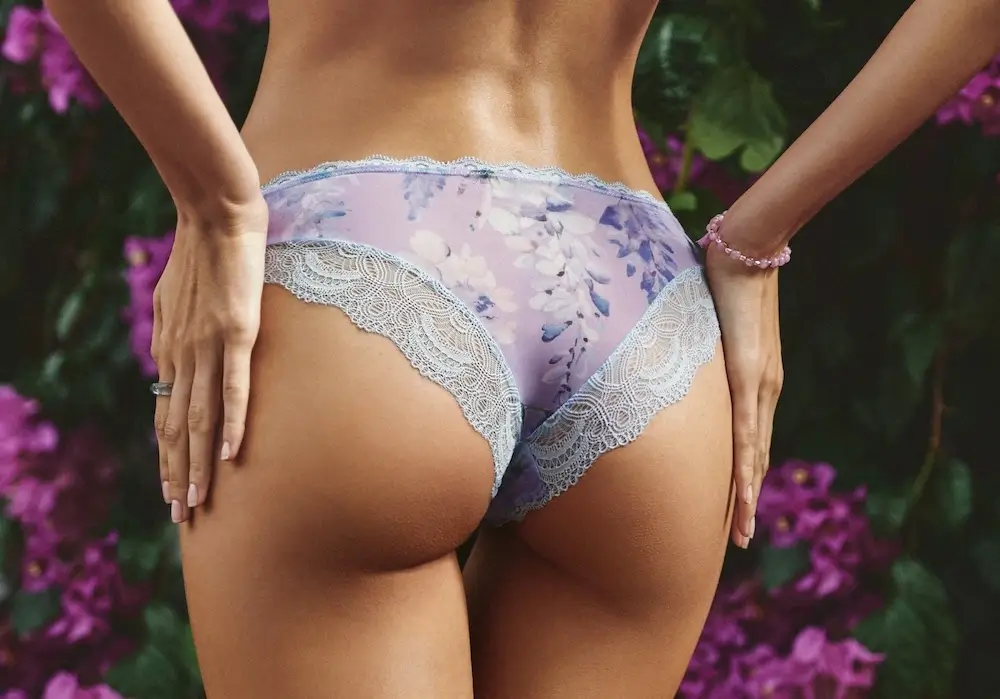
One of the most persistent divides in women’s underwear is the idea that everyday comfort and considered design cannot coexist. Lingerie is often categorised as either practical or beautiful, rarely both.
But this divide is not inevitable. It is largely the result of inherited design shortcuts – solutions that prioritise ease of production over how a garment actually feels and behaves on the body.
When elements like tight elastic waistbands are treated as non-negotiable, compromise becomes built into the product from the outset. Comfort is reduced to the most basic solutions. Aesthetics are constrained by what those solutions allow.
Remove that assumption, and the equation changes. The question is no longer what needs to be sacrificed, but how design can resolve both – allowing underwear to feel effortless to wear while remaining refined, intentional and visually considered.
Luciela was created around this exact design question. Rather than treating the elasticated waistband as a given, each piece begins by considering how the garment can sit securely on the body without relying on tension at the waist.
This shift changes how underwear is constructed. Support is not concentrated in a single band, but distributed through the garment – through the cut, the balance of stretch and structure, and the precise placement of seams and panels. Fabrics are selected not only for their appearance, but for how they behave when combined, allowing stability to come from the composition as a whole.
This approach makes it possible to work with multiple materials, delicate detailing and more intricate designs without defaulting to compression for stability. Instead of being held in place by force, each element contributes to how the piece sits and moves with the body.
The result is underwear that feels secure without feeling restrictive – pieces that follow the natural line of the waist and sit smoothly under clothing, as seen in styles like our Thistle Lace Brief or Pink Poppy Lace Thong. Not simplified for comfort, but designed for it.
As conversations around clothing become more considered – focusing on fit, longevity and how garments are experienced over time – underwear deserves the same level of attention. It is, after all, the layer worn closest to the body.
Rethinking design at this level is not about dramatic reinvention, but about questioning the small decisions that shape how something feels in everyday wear. Where pressure sits. How a garment responds to movement. Whether it works with the body, or quietly resists it.
When those questions are addressed with care, the experience of wearing lingerie begins to shift. It becomes less about adjustment and compromise, and more about ease – pieces that feel intuitive from the moment they are put on.
In that sense, good design does not demand attention. It is something that disappears into the background, leaving only the feeling of comfort, balance and quiet confidence.
More articles
We use cookies to improve your experience and to analyse our traffic. By continuing to browse, you agree to our use of cookies.
